

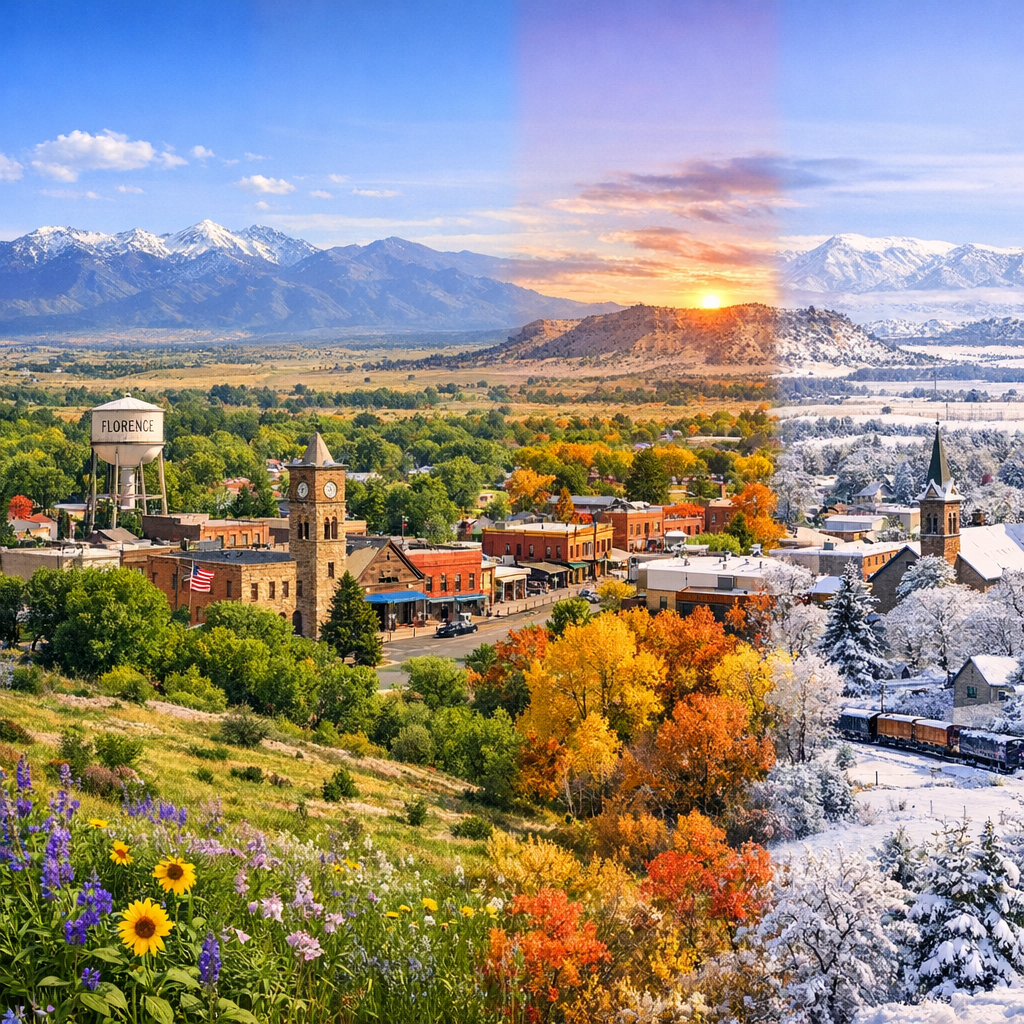
Florence, Colorado, experiences a diverse range of weather conditions throughout the year, offering residents and visitors a unique blend of seasonal changes. Understanding these patterns can help in planning activities and appreciating the local environment.
Seasonal Temperature Variations
The climate in Florence is characterized by distinct seasons:
- Summer (June to September): This period is marked by warm temperatures, with average daily highs exceeding 80°F. July stands out as the hottest month, averaging a high of 88°F and a low of 61°F.
- Winter (November to February): Winters are notably cold, with average daily highs below 54°F. December is the coldest month, featuring an average low of 25°F and a high of 47°F.
Precipitation and Humidity
Florence’s precipitation patterns vary across the year:
- Rainfall: The city receives an average annual precipitation of approximately 12.64 inches. May is typically the wettest month, averaging 1.99 inches of rainfall.
- Humidity: Relative humidity fluctuates seasonally, with the highest levels in January and February at 69%, and the lowest in June at 40%.
Environmental Considerations
Florence’s environment has faced challenges, including industrial activities impacting local ecosystems. Notably, the Holcim (US) Inc. Portland Plant reported 191,500 pounds of toxic releases across seven chemicals, including ammonia and benzene, in 2023. Additionally, a century-old coal mine debris pile near Florence was extinguished in April 2026 after burning for 20 years due to spontaneous combustion.
Understanding Florence’s climate and environmental dynamics is essential for residents and visitors to make informed decisions and contribute to the community’s well-being.